


*12th Sustainable Mountain Development Summit concludes in Dehradun*
– Summit gave a call to Himalayan states- for unity for nature-friendly, participatory policies
– “The Himalaya is an extremely sensitive region where life requires resilience” : Ms Ritu Khanduri
– Development in the Himalayas cannot be measured merely in terms of roads and buildings : MP Sh Trivendra Singh Rawat
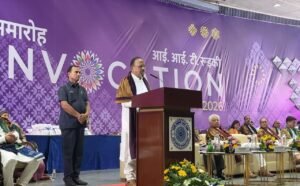
Dehradun : The second day of the 12th Sustainable Mountain Development Summit (SMDS-XII), organized by the Integrated Mountain Initiative (IMI) at Doon University, witnessed in-depth deliberations among legislators, scientists, and experts from Himalayan states on the challenges and solutions of sustainable development with the convern of increasing disaster in the Himalaya.The day featured the Mountain Legislators’ Meet (MLM), chaired by Uttarakhand Assembly Speaker, Ms. Ritu Khanduri Bhushan.
Distinguished participants included Sh. Nabam Tuki (former Chief Minister, Arunachal Pradesh), Sh. Munna Singh Chauhan, Sh. Kishore Upadhyay, Ms. Savita Kapoor, Sh. Brijbhushan Gairola, Sh. Asha Nautiyal (MLA, Uttarakhand), Ms. Anuradha Rana (MLA, Himachal Pradesh), Ms. Hekani Jakhalu, Sh. Wangpang Konyak (Nagaland), and Sh. Tikender S. Panwar (former Mayor, Himachal Pradesh). Also present were IMI President Sh. Ramesh Negi (Retd. IAS), former IMI President Sh P.D. Rai, MLM Convenor and Sh. Anoop Nautiyal.
Addressing the gathering, Speaker Ms. Ritu Khanduri said, “The Himalaya is an extremely sensitive region where life requires resilience. We must frame policies that ensure active participation of local communities. Only by integrating science with traditional knowledge can we secure a prosperous future for the Himalayas and the generations to come.” She further emphasized the need for a coordinated approach to Himalayan research, innovations, and policy-making across all Himalayan states that build resilience especially against disasters building on traditional knowledge.
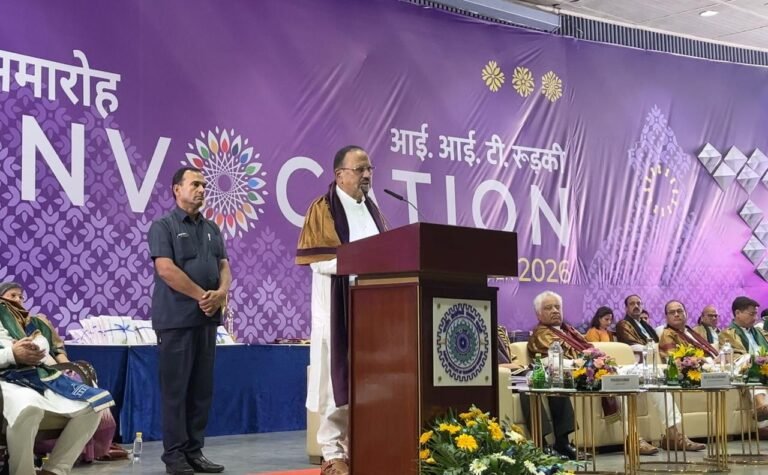
Chief Guest, Member of Parliament and former Chief Minister Sh. Trivendra Singh Rawat stated that development in the Himalayas cannot be measured merely in terms of roads and buildings. “True development must link conservation of natural resources with the livelihoods of local communities. Ongoing efforts in this direction must be accelerated,” he said.
Several other speakers presented their perspectives:
Sh Nabam Tuki underscored the importance of scientific construction practices in mountain regions.
Sh. Munna Singh Chauhan highlighted the need to revive the traditional wisdom of settlement and housing followed by our ancestors.
Sh. Kishore Upadhyay called for synergy between scientists, policymakers, and community participation in policy-making for the Himalayas.
Sh Brijbhushan Gairola stressed simplifying the outcomes of such summits for students and the general public.
Ms Anuradha Rana pointed out the shrinking availability of safe land for housing amid rising population density and suggested policy interventions to identify secure settlement areas.
Ms Hekani Jakhalu urged collective efforts for Himalayan conservation, adding that construction without scientific validation should not be permitted.
Sh Wangpang Konyak emphasized that local communities have the deepest understanding of the Himalayas and that their traditional knowledge must be integrated into modern lifestyles.
Sh. Tikender S. Panwar called for redefining the concepts of development, aspiration, and necessity. He stressed that for us in the Himalaya we are victims of extractive development process.
On the occasion, Dr. Durgesh Pant, Director General of UCOST, shared key learnings, while eminent environmentalist Dr. Ravi Chopra presented detailed studies on climate change and adaptation.
The session began with a welcome address by Ms. Binita Shah, who also briefed participants about IMI’s objectives. Sh Anoop Nautiyal presented an eight-point agenda for policy-making tailored to Himalayan states. The session concluded with a vote of thanks by Sh Ramesh Negi.
The final day of the 12th Sustainable Mountain Development Summit featured three parallel sessions on climate change adaptation, disaster preparedness, and water management. Session leads highlighted critical issues such as strengthening mountain agroecology, addressing the rising frequency of mountain disasters, and the urgent need for region-specific policies.
Experts, policymakers, and scientists from across Himalayan states shared best practices, assessed emerging risks, and recommended actionable strategies. Key recommendations included the establishment of dedicated mountain policy and decision-making bodies at the national level, supported by participatory planning processes and adequate financial allocation.
Discussions also emphasized community-driven resilience, risk-sensitive planning, and integrated water resource management as essential approaches for the future.
The summit concluded with the adoption of the “Dehradun Declaration”, reaffirming a collective commitment to sustainable and inclusive mountain development.
The two-day summit drew around 250 participants, including scientists, policymakers, social workers, students, and farmers from Himalayan states. A special attraction was the exhibition of local products at the venue, which highlighted the cultural and ecological richness of the region.


+ There are no comments
Add yours